2026 Best Transformer Coil Types for Global Buyers?
Choosing the best Transformer Coil in 2026 requires more than comparing prices or browsing supplier catalogs. Global buyers must match coil design with voltage class, power rating, insulation system, cooling method, and operating environment. A compact layer-wound coil may suit distribution transformers with moderate ratings. Disc and helical coils often support higher-power applications and stronger mechanical performance during short-circuit events. Foil coils can improve current distribution in suitable low-voltage designs.
Real purchasing decisions begin with site conditions. A coastal installation may need stronger moisture protection and corrosion-resistant materials. A factory transformer may require reinforced insulation and better thermal control. I have seen specifications fail because ambient temperature was treated as an afterthought. Small details matter. A five-degree error can change expected coil life.
Reliable buyers should examine conductor material, insulation thickness, winding tension, impulse-test results, temperature-rise data, and traceable quality records. Suppliers should explain manufacturing tolerances clearly. They should also provide drawings, routine-test reports, and evidence of consistent production. International standards can guide evaluation, but local grid requirements still deserve careful review. One specification rarely fits every market.
This guide compares practical Transformer Coil types for utilities, industrial users, renewable-energy projects, and equipment manufacturers. It considers efficiency, durability, repairability, lead time, and total ownership cost. The most expensive option is not always the safest choice. The cheapest one may create hidden maintenance risks. Some conclusions remain conditional, because performance depends on design integration, materials, and factory workmanship. That uncertainty deserves honest attention.
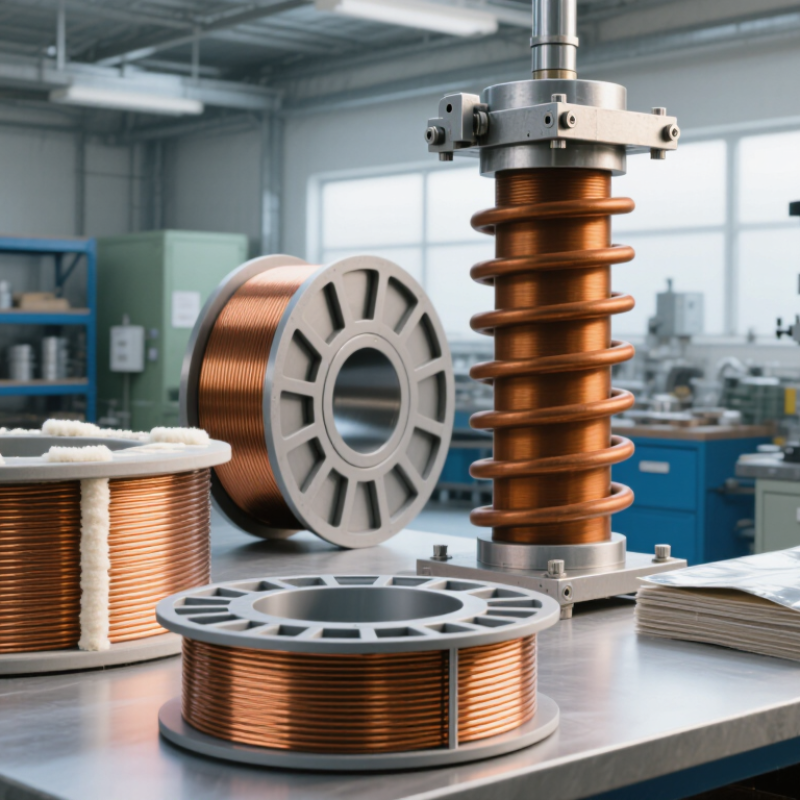
Transformer Coil Fundamentals and Their Role in Power Conversion
2026 Best Transformer Coil Types for Global Buyers?
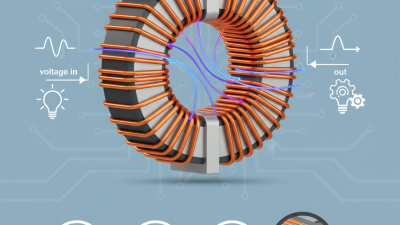
Transformer coils transfer energy between circuits through electromagnetic induction. Their geometry controls voltage conversion, heat removal, insulation stress, and short-circuit strength. Layer windings suit many low-to-medium voltage designs. Foil windings handle high currents with compact conductors. Disc windings support higher voltages and improve oil circulation. Helical coils are useful when current rises sharply.
The choice is never universal. A buyer should compare load profile, frequency, altitude, ambient temperature, and maintenance access. Copper usually offers strong conductivity and mechanical strength. Aluminum can reduce weight and material cost, but it needs careful joint design. I have seen small design assumptions create large thermal problems. A coil can pass factory tests yet struggle under repeated overloads. That gap deserves attention.
Grid demand is becoming less predictable. The International Energy Agency’s Electricity 2024 report projects global electricity demand growth of about 3.5% annually through 2026. Its World Energy Investment 2024 report also indicates grid investment must rise from roughly 400 billion dollars annually toward more than 600 billion dollars by 2030. These figures increase pressure for efficient, durable transformer coils. Buyers should request temperature-rise data, impulse-test results, loss calculations, and insulation-system evidence. Independent inspection adds confidence. The best coil type depends on verified operating conditions, not a catalogue ranking. Sometimes, the cheapest winding becomes the expensive choice.
Core Transformer Coil Types and Their Structural Differences
2026 Best Transformer Coil Types for Global Buyers?
Core Transformer Coil Types and Their Structural Differences
Transformer coil design directly affects insulation, cooling, voltage distribution, and mechanical strength. Global buyers should compare structure before comparing price. Layer-wound coils use separated turns arranged in cylindrical layers. They suit smaller transformers and moderate voltage applications. Their structure is simple, inspectable, and usually economical. However, interlayer insulation can increase the coil’s radial size.
Helical coils use continuous conductors shaped like a spiral. They provide strong mechanical support under short-circuit forces. This design often fits high-current windings with fewer turns. Disc coils divide the winding into vertical sections connected alternately. Their construction improves impulse-voltage control and oil circulation. Yet, disc winding requires tighter manufacturing tolerances and careful lead placement. A small alignment error can disturb voltage distribution.
Foil coils use wide, thin metal strips instead of round conductors. They offer a large contact area and reduce turn-to-turn stress. These coils work well in low-voltage, high-current transformers. Pancake coils contain flat spiral sections stacked along the winding axis. They can manage voltage gradients effectively, but their connections may require more installation space. In field inspections, technicians should check clamping pressure, conductor edges, and insulation compression. A paper calculation can still miss local heating. That deserves attention. Material choice, cooling path, and operating frequency must match the actual duty cycle. No single coil structure suits every grid, climate, or load profile.
How to Compare Coil Materials, Insulation, and Winding Methods
Choosing a transformer coil in 2026 requires more than comparing purchase prices. Global buyers should examine conductor material, insulation, winding structure, and service conditions together. Copper offers strong conductivity and mechanical strength. Aluminum usually reduces weight and material cost. However, its larger cross-section can affect coil dimensions and connection design.
Insulation must match temperature, voltage, moisture, and expected operating hours. Enamel, kraft paper, polyester film, and varnish each perform differently. Ask for thermal-class data and insulation-system test results. Do not rely on a single material label. In humid environments, sealed insulation and controlled drying become especially important. Small gaps can become serious weaknesses.
Winding methods also influence performance. Layer windings suit many compact designs and support controlled voltage distribution. Disc windings can improve mechanical strength during short-circuit events. Foil windings reduce radial stress in selected low-voltage applications. The correct choice depends on current, voltage, cooling, and available space. Field engineers should review conductor tension, edge protection, and turn-to-turn insulation. A minor winding defect may remain invisible during routine inspection.
Independent tests should include resistance, ratio, dielectric strength, partial discharge, and temperature-rise checks. Compare test conditions, not only test values. A spreadsheet can mislead.
No coil design is perfect. Cost pressure may encourage thinner insulation or tighter dimensions. That decision deserves careful review. Global buyers should request drawings, material certificates, process records, and traceable test reports before approving production.
Selecting Transformer Coils for Voltage, Frequency, and Load Demands
2026 Best Transformer Coil Types for Global Buyers?
Selecting Transformer Coils for Voltage, Frequency, and Load Demands
Coil selection should begin with voltage, frequency, and load behavior. A layer winding suits moderate voltage and simpler insulation systems. Disc and continuous-disc coils handle higher voltages more effectively. Foil windings work well for low-voltage, high-current applications, where conductor width reduces losses and improves mechanical strength.
Frequency changes the design balance. A 50 Hz transformer may need different magnetic and thermal allowances than a 60 Hz unit. Higher frequency can increase eddy-current losses in conductors. This makes transposed conductors, strand insulation, and careful spacing increasingly important. Not glamorous, but critical.
Load conditions deserve closer attention. The IEA Electricity 2024 report projects global electricity demand growth of about 4% annually through 2026. More variable loads may increase thermal cycling and short-circuit stress. Disc windings usually offer stronger axial support, while helical windings can suit high-current, lower-voltage duties. DOE’s Distribution Transformers Technical Support Document emphasizes the importance of both no-load and load losses when evaluating efficiency. Buyers should request tested loss data, temperature-rise results, impedance values, and impulse-insulation records under IEC 60076 requirements. A neat spreadsheet is not enough. Field conditions can disagree. Ambient heat, harmonics, and uneven phase loading may expose weaknesses that laboratory data misses. My practical preference is conservative thermal design, although it can raise initial cost. Sometimes, that decision still needs rechecking.
Global Buyer Standards, Applications, and Supplier Evaluation Criteria
2026 Best Transformer Coil Types for Global Buyers?
Global buyers should select transformer coil types according to application, not popularity.
EI coils suit general power supplies and cost-sensitive equipment.
Toroidal coils reduce magnetic leakage and audible noise in compact devices.
C-core coils offer efficient magnetic performance for demanding industrial systems.
Planar coils support thin designs, high-frequency circuits, and automated assembly.
Supplier evaluation requires more than a catalog review. Ask for insulation-class data, winding drawings, thermal test results, and production tolerances. Check whether the supplier can provide traceable material records and consistent batch inspection. A reliable supplier should explain copper grade, wire diameter, impregnation method, and expected operating temperature. Samples should be tested under realistic load conditions, including heat, vibration, and repeated power cycles. Paper compliance is not enough.
Tips:
Compare at least three suppliers using the same technical specification. Inspect winding tension and layer alignment on sample units. Request failure data, not only success claims. Confirm packaging quality before overseas shipment. Consider local service capability when replacement delays could stop production. No checklist is perfect. In practice, buyers often underestimate moisture protection and connector strength. I would also leave room for design changes, because a coil that passes laboratory testing may perform differently inside a crowded enclosure. A small pilot order can reveal these weaknesses before full production.